
San Diego Tankless Water Heaters
Tankless Water Heater Installation in San Diego, CA New tankless water heater installations, tank-to-tankless conversions, whole-home and point-of-use systems. Gas and electric options, sized around your home's hot-water demand.
Get a tankless water heater installed or replaced in San Diego, CA. Call now to discuss your installation and request service.
-
Proper System Sizing
Matched to your home's hot-water demand
-
Gas & Electric Options
Installation based on available utility capacity
-
Conversion Ready
Tank-to-tankless projects evaluated before installation
-
San Diego Service Area
Installation throughout the City of San Diego
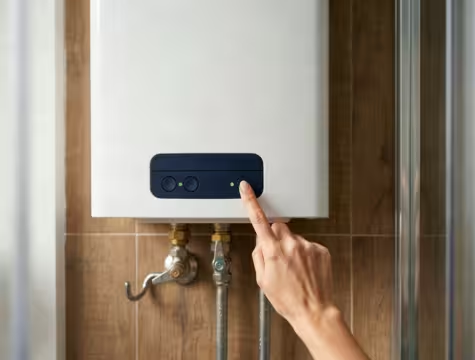
What to expect
What Your Tankless Water Heater Installation May Include
A tankless water heater installation can involve more than mounting the unit. The project scope is based on your home's hot-water demand, fuel source, existing utilities, and installation location.
- Hot-water demand assessment and system sizing
- Gas supply or electrical capacity review
- Venting requirements for gas tankless systems
- Indoor or outdoor unit mounting
- Hot and cold water connections
- System startup, testing, and operational checks
Call to discuss your tankless water heater installation scope, including system sizing, utility requirements, venting, placement, and connection needs for your home.
Tankless Water Heater Installation Options
Tankless Water Heater Installation Options in San Diego
Tankless water heater installation can take different forms depending on your home, existing water-heating setup, available utilities, and hot-water requirements. Installation options range from a single point-of-use unit to a whole-home system or a complete tank-to-tankless conversion.
-
Whole-Home Tankless Water Heater Installation
A whole-home tankless water heater is designed to supply hot water to multiple fixtures and appliances throughout the home. The installation starts with matching the system to expected hot-water demand and confirming that the available gas or electrical infrastructure can support the selected unit.
-
Point-of-Use Tankless Water Heater Installation
Point-of-use tankless water heaters serve a specific fixture or localized area, such as a bathroom, sink, or other location where dedicated hot-water delivery is useful. These compact systems can be considered when a whole-home unit is unnecessary or when a particular fixture has its own hot-water requirements.
-
Gas Tankless Water Heater Installation
Gas tankless water heater installation requires evaluation of the available gas supply, unit input requirements, venting configuration, placement, and water connections. The selected unit must also be compatible with the proposed installation location and available gas infrastructure.
-
Electric Tankless Water Heater Installation
Electric tankless water heater installation depends heavily on available electrical capacity. The selected unit must be compatible with the home's electrical service, panel capacity, circuit requirements, and intended hot-water demand before installation.
-
Tank-to-Tankless Water Heater Conversion
Converting from a traditional storage-tank water heater to a tankless system involves more than replacing one appliance with another. The existing gas or electrical supply, water connections, venting, mounting location, and system capacity all need to be evaluated for the new tankless configuration.
-
Existing Tankless Water Heater Replacement
An existing tankless unit can also be replaced with a new tankless water heater when the project calls for a different capacity, fuel configuration, efficiency level, or installation setup. Compatibility with the existing utilities, venting, connections, and mounting location should be reviewed before the new unit is installed.
Tankless Water Heater Sizing
How Tankless Water Heaters Are Sized in San Diego
A tankless water heater should be sized around how much hot water the home may need at the same time and how much the incoming water must be heated-not by square footage alone. The two key sizing factors are required flow rate, measured in gallons per minute (GPM), and temperature rise.
Key Factor
GPM and Simultaneous Hot-Water Demand
GPM describes how much water flows through the tankless system each minute. To determine the capacity a home may need, the important question is not simply how many fixtures are installed, but which hot-water fixtures may operate at the same time.
For example, a home may need to support a shower while another shower, bathroom faucet, kitchen fixture, dishwasher, or other hot-water appliance is also operating. The expected flow from those simultaneous uses is considered together to estimate the system's required GPM capacity.
This is why two homes with a similar number of bathrooms can require different tankless systems. A household that regularly uses multiple showers and appliances at the same time can place a higher demand on the unit than a household where hot-water use is usually staggered.
Key Factor
Temperature Rise Matters Too
Flow rate alone does not determine tankless water heater capacity. The unit must also raise the incoming water temperature to the desired hot-water temperature. The difference between those two temperatures is called the temperature rise.
The greater the required temperature rise, the more heating capacity the system needs to maintain a given flow rate. As temperature-rise requirements increase, the amount of hot water a particular tankless unit can deliver at the target temperature may decrease.
That relationship is why tankless sizing should consider GPM and temperature rise together rather than treating the manufacturer's maximum flow-rate figure as a universal whole-home capacity.
How Peak Demand Is Built
Bathrooms, Showers, and Appliances
The number of bathrooms is useful context, but the expected pattern of hot-water use matters more. Sizing should consider showers, tubs, bathroom and kitchen fixtures, and hot-water-using appliances that may operate concurrently.
A properly selected whole-home system should therefore be matched to the home's realistic peak hot-water demand-not simply the total number of fixtures that exist. Point-of-use systems are evaluated differently because they are intended to serve a specific fixture or localized demand rather than the entire home.
Important Distinction
Why Square Footage Alone Does Not Size a Tankless Water Heater
Home size can provide general context, but square footage does not tell us how many gallons of hot water must be heated per minute. A larger home with low simultaneous demand may require less tankless capacity than a smaller home where several showers and appliances are frequently used at once.
For tankless water heater installation, the more useful sizing relationship is: Simultaneous Hot-Water Demand + Required GPM + Temperature Rise → Required System Capacity. Evaluating these factors before installation helps match the tankless unit to the way hot water is actually used in the home.
Tankless Installation Requirements
Gas vs Electric Tankless Water Heater Installation
Gas and electric tankless water heaters can both provide on-demand hot water, but the installation requirements are very different. The right option depends not only on hot-water demand and system capacity, but also on the utilities already available at the property.
| Installation Factor | Gas Tankless Water Heater | Electric Tankless Water Heater |
|---|---|---|
| Primary utility requirement | Adequate natural gas or propane supply | Adequate electrical service and panel capacity |
| Capacity consideration | Gas line, meter capacity, and unit BTU input must be evaluated | Electrical load, breaker requirements, and available panel capacity must be evaluated |
| Dedicated infrastructure | May require gas-line modifications depending on unit demand | Often requires one or more dedicated high-amperage circuits |
| Venting | Required for indoor gas-fired units according to system design and manufacturer requirements | No combustion venting required |
| Condensate | Condensing models may require condensate drainage | No combustion condensate |
| Installation complexity | Can increase if gas supply, venting, or routing must be changed | Can increase if the electrical service or panel cannot support the required load |
| Best fit depends on | Available gas capacity, installation location, venting options, and hot-water demand | Available electrical capacity, circuit space, load requirements, and hot-water demand |
The fuel type should therefore be evaluated together with the home's required GPM, temperature rise, and expected simultaneous hot-water demand. A unit may meet the desired flow requirement on paper but still require utility upgrades before it can be installed correctly.
Gas Line and BTU Requirements
Gas tankless water heaters can have substantial fuel-demand requirements, so the existing gas system should be evaluated before installation. The unit's BTU input must be considered together with the size and length of the gas piping, available supply pressure, other gas appliances in the home, and the capacity of the gas meter.
Gas line sizing matters because the piping must be able to deliver enough fuel when the tankless water heater is operating at high demand. A gas line that was adequate for a traditional storage-tank water heater is not automatically adequate for a higher-input tankless unit.
Meter capacity is part of the same evaluation. The total connected gas load of the property can include the tankless water heater along with furnaces, ranges, dryers, fireplaces, or other gas appliances. If the combined demand exceeds what the existing meter or gas supply can support, additional work may be required before the new unit is installed.
The required tankless capacity and the available gas capacity therefore need to be evaluated together before the unit is selected.
Indoor gas installations also require a venting configuration approved for the selected unit and proposed location.
Electrical Panel and Circuit Requirements
Electric tankless water heaters depend on available electrical capacity rather than gas supply. Before installation, the home's electrical service, panel capacity, available breaker space, and the power requirements of the selected unit should be evaluated together.
Whole-home electric tankless systems can require a substantial electrical load. Depending on the model, installation may require multiple dedicated circuits rather than a single standard household circuit. Each required circuit must be sized for the manufacturer's electrical specifications and connected through the appropriate overcurrent protection.
Panel capacity is especially important because an electrical panel can have physical breaker space without necessarily having enough available service capacity for the added load. The existing household demand and the tankless unit's requirements should therefore be considered together.
If the selected unit exceeds the home's available electrical capacity, additional electrical work may be required before installation.
Tankless Water Heater Permits
Tankless Water Heater Permits in San Diego
In San Diego, plumbing/gas permitting applies to alterations, additions, or replacements of a plumbing system or part of a plumbing system. For tankless water heater projects, an important local distinction is that the City of San Diego lists standard water-heater replacements among Simple "No-Plan" Plumbing/Gas Permit projects but specifically excludes tankless types from that eligibility.
According to the City of San Diego Development Services Department, the applicable plumbing/gas permit process depends on the scope of work. City guidance distinguishes between a Simple "No-Plan" Plumbing/Gas Permit and a Plan (Required) Plumbing/Gas Permit.
What the Tankless Exclusion Means
The City's exclusion of tankless water heater replacements from the Simple "No-Plan" replacement category means a tankless project should not be treated as a standard No-Plan water-heater replacement. It does not, by itself, establish that every tankless installation follows exactly the same permit path.
The requirements for a specific tankless installation should be confirmed based on the actual scope of work and the property involved. Relevant project distinctions can include whether the work is a new installation, a tank-to-tankless conversion, or replacement of an existing tankless unit, as well as whether plumbing or gas-system alterations are part of the installation.
Property type also matters within the City's permitting framework. The City provides different permitting guidance for single-family homes, duplexes and townhomes versus multifamily, commercial, and other nonresidential properties. Its Simple "No-Plan" eligibility guidance also distinguishes historically or potentially historically designated properties.
Permit Review and Inspection
Because tankless types are expressly excluded from the City's Simple "No-Plan" water-heater replacement category, the appropriate permit path should be verified for the specific project rather than assumed from a conventional water-heater replacement.
The City directs applicants to its current Plumbing/Gas Permit guidance and Information Bulletin 103 (IB-103) when determining whether a proposed scope qualifies for the Simple "No-Plan" process or requires another review path.
After an applicable permit is issued, an inspection can be scheduled through the City's permitting process.
For current requirements and project-specific guidance, see the City of San Diego Development Services Department's Plumbing/Gas Permit information.
San Diego Water Quality Considerations
San Diego Hard Water and Installation Design
Water hardness is worth considering when planning a tankless water heater installation in San Diego. The City of San Diego reports that drinking water averages about 16 grains per gallon (276 ppm), with typical levels ranging from 16 to 18 gr/gal depending on water demand and the area of the city.
Why Hard Water Matters for a Tankless Water Heater Installation
A tankless water heater moves water through a compact heat exchanger where heat is transferred directly into the water as it flows. With harder water, dissolved minerals create greater potential for scale to form on heat-transfer surfaces over time. As deposits build, they can interfere with efficient heat transfer and reduce the internal flow area available through the heat exchanger.
That makes water hardness an installation-design consideration-not simply a future maintenance topic. The goal is not to change the sizing method based on hardness, but to install the system in a way that preserves practical access to the water side of the unit when service is eventually required.
Isolation and Service Valves Should Be Considered at Installation
Installing accessible isolation and service valves on the hot- and cold-water connections can make the tankless unit easier to isolate from the home's plumbing and provide service access to the heat exchanger. This configuration can allow future flushing or descaling procedures to be performed through dedicated service connections without unnecessarily reworking the surrounding water piping.
Valve placement and accessibility matter as much as simply having the valves present. The installation should leave enough practical access around the unit and its service connections so that the water circuit can be reached when needed.
For San Diego homes, considering local water hardness during installation helps preserve practical access to the heat exchanger, service valves, and water connections after the unit is in place.
Tank-to-Tankless Conversion Considerations
Tank-to-Tankless Conversion in San Diego
Converting from a traditional storage-tank water heater to a tankless system is more than an appliance swap. A tankless conversion should account for the home's hot-water demand, the capacity of the selected unit, available gas or electrical infrastructure, venting, water connections, and the location where the new system will be installed.
What Has to Be Evaluated for a Tankless Conversion
-
Gas Supply
For a gas tankless system, the existing gas supply must be evaluated against the input requirements of the new unit. A gas connection that supported a storage-tank water heater may not automatically provide the capacity required for a tankless model.
-
Electrical Requirements
Gas tankless units still require electrical power for controls and other components, while electric tankless systems can place a much larger demand on the home's electrical service. The required electrical configuration therefore depends on the type and capacity of the system being installed.
-
Venting
Replacing a tank water heater with a gas tankless unit can change the venting requirements. The selected model, installation location, exhaust routing, manufacturer requirements, and whether the unit is condensing or non-condensing all influence the final venting configuration.
-
Water Connections
Existing hot- and cold-water piping must be connected to the new tankless layout. Connection locations can change when the storage tank is removed, and the installation can also be designed with accessible isolation and service valves for the tankless unit.
-
Mounting Location
Tankless systems are wall-mounted rather than floor-standing storage tanks, so the installation location must provide appropriate support, utility access, required clearances, and a workable route for water, gas or electrical connections, and venting where applicable.
-
Removal of the Existing Tank
The storage-tank water heater must be disconnected and removed as part of the conversion scope. The space it occupied does not necessarily determine where the new tankless unit should be mounted; placement should be based on the requirements of the selected system and the surrounding infrastructure.
-
Permit Implications
Because a tank-to-tankless conversion can involve changes beyond a conventional water-heater replacement, the applicable San Diego permit path should be determined from the actual scope of work and property involved rather than assumed from the existing installation.
-
Capacity and Sizing
The new tankless unit should be sized for realistic simultaneous hot-water demand, required GPM, and temperature rise. Removing a large storage tank does not mean the replacement tankless unit is sized according to the old tank's gallon capacity-the two systems store and deliver hot water differently.
Storage-Tank Capacity Does Not Translate Directly to Tankless Capacity
A conventional water heater is commonly described by how many gallons it stores, while a tankless water heater is sized around the amount of hot water it can heat as water flows through the system. A 40- or 50-gallon storage tank therefore does not translate directly into a particular tankless model.
The conversion should instead return to the home's simultaneous hot-water demand, required GPM, and temperature rise, then confirm that the available gas or electrical infrastructure can support the required tankless capacity.
A well-planned tank-to-tankless conversion therefore connects four decisions: hot-water demand → tankless capacity → available utilities → installation configuration.
Call for Tankless Water Heater Installation to discuss a tank-to-tankless conversion in San Diego.
Need Tankless Installation? Call Now · (877) 593-0439Tankless Installation Considerations
Condensing vs Non-Condensing Tankless Units
Whether a tankless water heater is condensing or non-condensing can change the venting, drainage, and placement requirements of the installation. The main differences come from exhaust temperature and how each type handles combustion gases.
| Installation Consideration | Condensing Unit | Non-Condensing Unit |
|---|---|---|
| Exhaust temperature | Lower | Higher |
| Venting | Uses venting approved for the selected condensing model | Requires venting rated and approved for higher exhaust temperatures |
| Condensate drain | Required because the unit produces condensate | Typically not required for normal combustion operation |
| Neutralizer | May be needed depending on condensate-disposal requirements | Generally not part of the installation |
| Routing | Venting and condensate drainage both need workable routes | Vent routing, material, clearances, and termination are key constraints |
How This Affects Installation Design
A condensing tankless unit requires both an approved venting path and a practical way to route condensate to an appropriate drain. Because the condensate can be acidic, a neutralizer may also be required or appropriate depending on the installation and applicable requirements. Drain availability can therefore influence where the unit is mounted.
A non-condensing unit operates with higher exhaust temperatures, making the approved vent type and routing especially important. The vent system must be suitable for the selected unit, and the proposed route must accommodate required clearances, allowable vent length, fittings, and termination.
In either case, the existing water-heater location should not automatically be assumed suitable for the new tankless system. Vent routing, drain access, manufacturer clearances, available utilities, and termination options should be evaluated before the final mounting location and unit are selected.
Tankless Installation Placement
Where Tankless Water Heaters Can Be Installed
Tankless water heaters can be installed in several locations, but the best placement depends on the selected unit, available utilities, manufacturer clearances, venting requirements, service access, and applicable code. The existing water-heater location may work, but it should not be assumed to be the best or automatically compatible location for a tankless system.
What Determines the Final Placement?
Wall space alone does not determine where a tankless water heater should be installed. The location must provide the required manufacturer clearances, water connections, gas or electrical supply, venting and termination where applicable, condensate drainage where required, and reasonable access to service connections.
For gas-fired systems, the location must also support the combustion-air and exhaust configuration required by the selected model. The final placement should therefore be chosen around the complete installation-not simply around where the unit physically fits.
Tankless Installation Process
Tankless Water Heater Installation Process
A tankless water heater installation should begin with the home's hot-water requirements and end with a system that has been properly connected, configured, and tested. The exact scope can vary by fuel type, installation location, existing utilities, and whether the project is a new installation or a tank-to-tankless conversion.
Home and Hot-Water Assessment
The process starts by reviewing how the home uses hot water. Bathrooms, showers, fixtures, appliances, simultaneous demand, existing water-heating equipment, available utilities, and the proposed installation area are evaluated to establish the project's basic requirements.
Tankless System Sizing
The system is then sized around expected simultaneous hot-water demand, required flow rate in GPM, and temperature rise. Square footage or the gallon capacity of an existing storage tank alone does not determine the appropriate tankless capacity.
Unit and Configuration Selection
Once the required capacity is understood, the tankless configuration can be matched to the project. This includes fuel type, whole-home or point-of-use use, required output, condensing or non-condensing design, and compatibility with the home's available infrastructure.
Gas, Electrical, and Venting Review
Before installation, the utilities required by the selected unit must be evaluated. Gas systems can require review of gas-line capacity, meter capacity, BTU demand, and venting. Electric systems require sufficient electrical service, panel capacity, and the dedicated circuits specified for the unit.
For gas-fired systems, vent routing, termination, and combustion requirements also need to work with the proposed installation. Condensing models additionally require a practical route for condensate drainage.
Installation Location and Layout
The mounting location is selected based on manufacturer clearances, available utilities, venting or drain routing where applicable, wall or mounting conditions, and access to service connections. The existing water-heater location may be suitable, but it should not be assumed compatible without evaluating the complete installation.
Installation and Connections
The tankless unit is mounted and connected to the required hot- and cold-water piping, gas or electrical supply, and venting system where applicable. Condensing installations also include the required condensate routing. Isolation and service valves can be incorporated into the water connections to provide practical access to the unit's water circuit.
For a tank-to-tankless conversion, this stage also includes disconnecting and removing the existing storage-tank water heater as required by the project scope.
Startup, Testing, and Operational Checks
After the physical installation is complete, the system is started and checked for proper operation. Connections, water flow, heating response, controls, and applicable system settings are verified before the installation is considered complete.
Where permits or inspections apply, the required process should be confirmed for the specific San Diego project. Whether permit application or inspection coordination is included as part of the installation service depends on the provider's confirmed scope of work.
Cost Factors
What Affects Tankless Water Heater Installation Cost in San Diego?
Tankless water heater installation cost depends on more than the price of the unit itself. The final project scope is influenced by the home's existing utilities, the capacity and configuration of the selected system, where it will be installed, and how much work is required to make the new tankless setup compatible with the property.
1. Gas-Line Changes
If the existing gas piping or meter capacity cannot support the selected unit's BTU load along with other gas appliances, gas-system changes can expand the installation scope.
2. Electrical Upgrades
Insufficient electrical service, panel capacity, breaker space, or dedicated-circuit capacity can require additional electrical work before installation.
3. Venting Requirements
Vent material, route length, fittings, termination location, and routing difficulty can all affect the scope of an indoor gas tankless water heater installation.
4. Condensing vs. Non-Condensing Configuration
Condensing systems can add condensate-drain and possible neutralizer requirements, while non-condensing units can require different high-temperature venting.
5. Tankless Unit Capacity
Higher hot-water demand can require greater system capacity, which may also change the supporting gas, electrical, or venting requirements.
6. Tank-to-Tankless Conversion Complexity
A conversion can add gas or electrical changes, new venting, revised water connections, wall mounting, condensate routing, and other work not required in an already compatible tankless water heater installation.
7. Placement and Access
Difficult access, limited working space, longer utility runs, or complex routing can increase installation complexity.
8. Existing Water Heater Removal
Disconnecting and removing an existing storage-tank or tankless water heater can add to the project scope, particularly where access is limited.
9. Permit and Inspection Requirements
Applicable permit and inspection requirements can also affect project scope. In San Diego, the appropriate permit path should be determined for the specific tankless project rather than assumed from a conventional water-heater replacement.
10. Recirculation Options
Adding recirculation can require a return-line configuration, compatible crossover solution, pump or controls, and additional piping or connections depending on the home's layout and selected system.
Installation Suitability of a Tankless Water Heater
Is Tankless Right for Your San Diego Home?
A tankless water heater can be a strong fit for many San Diego homes, but the right decision depends on more than replacing a storage tank with a smaller wall-mounted unit. Hot-water demand, available gas or electrical capacity, venting options, plumbing layout, and the condition of the existing installation all affect how straightforward the project will be.
When a Tankless System Can Be a Good Fit
A properly sized tankless system can work well when the home has sufficient utility capacity and the selected unit can support the household's realistic peak hot-water demand. It can provide whole-home hot water within its rated flow capacity while freeing the floor space previously occupied by a storage tank.
Tankless can also make sense when the installation location provides workable access to water connections, gas or electrical service, venting where required, and future service points. The goal is to match the system to both the way the household uses hot water and the infrastructure available to support it.
When the Installation May Require Additional Work
Some homes are good candidates for tankless but need infrastructure changes before the system can be installed correctly. Common conditions that can expand the project scope include:
- Undersized gas line: The existing gas piping or meter capacity may not support the BTU demand of the selected tankless unit.
- Insufficient electrical capacity: Whole-home electric systems may require more service, panel, or dedicated-circuit capacity than the home currently has available.
- Difficult venting: Long vent runs, limited termination options, or required clearances can make some indoor gas installation locations impractical or more complex.
- Long hot-water runs: Longer piping between the heater and fixtures can increase hot-water wait time, making recirculation worth evaluating.
- High simultaneous hot-water demand: Multiple fixtures operating together can require greater tankless capacity and supporting gas or electrical capacity.
The Right Question Is Whether the Whole Installation Works
Tankless suitability should be evaluated as a complete system rather than by the appliance alone. A unit can be physically small enough to fit on a wall yet still be a poor match if the home's hot-water demand exceeds its capacity or the available gas, electrical, venting, or plumbing infrastructure cannot support the installation without significant changes.
Conversely, needing an infrastructure upgrade does not automatically make tankless unsuitable. It means the additional work should be identified before the unit is selected so the homeowner can understand the actual installation scope.
The best tankless installation is one where hot-water demand, system capacity, utility availability, venting, placement, and plumbing layout all work together.
Tankless Recirculation Considerations
Recirculation and Hot-Water Delay
A tankless water heater provides on-demand heating, but that does not necessarily mean hot water arrives instantly at every faucet or shower. When a fixture is opened, the water already sitting in the piping between the tankless unit and that fixture must move out before newly heated water reaches the tap.
The longer the plumbing run between the water heater and a frequently used fixture, the more noticeable that delay can be. This is a distribution issue within the home's hot-water piping-not necessarily a limitation of the tankless heater itself.
How Recirculation Can Affect Installation Design
When reducing hot-water wait time is an important goal, recirculation can be considered as part of the tankless installation design. The appropriate configuration depends on the home's existing plumbing layout, the selected tankless unit, and whether a dedicated hot-water return path is available.
A dedicated recirculation return line provides a separate path for water to circulate back toward the heater. Where a dedicated return line is not available, some compatible systems can use a crossover configuration at a fixture to create an alternative return path through the existing plumbing. Which approach is appropriate depends on the system design and manufacturer requirements.
Recirculation can also influence unit selection, piping layout, pump or control requirements, connection locations, and where related components can be accessed after installation. These considerations are easier to account for when they are evaluated before the final tankless system and installation layout are selected.
Recirculation Does Not Replace Proper Sizing
Recirculation is intended to address hot-water delivery delay; it does not increase the tankless water heater's rated flow or heating capacity. The unit still needs to be sized for simultaneous hot-water demand, required GPM, and temperature rise.
For homes with long hot-water runs, evaluating fixture distance and recirculation options during the installation planning stage can help align the tankless system with both required capacity and the way hot water is delivered throughout the home.
Tankless System Benefits
Benefits of a Properly Sized Tankless System
When a tankless water heater is properly sized for the home's hot-water demand, it can provide several practical advantages.
- Compact footprint: Wall-mounted tankless units can free up floor space compared with a traditional storage-tank water heater.
- On-demand heating: Water is heated as it is needed rather than being continuously stored in a tank.
- Continuous hot water within rated flow capacity: A properly sized system can continue producing hot water as long as demand stays within the unit's rated flow and heating capacity.
- Efficiency potential: Heating water on demand can reduce standby heat losses associated with storing hot water, although actual efficiency depends on the unit, installation, and household use.
- Whole-home or point-of-use flexibility: Tankless systems can be configured to serve an entire home or a specific fixture or localized hot-water demand, depending on the application and available infrastructure.
The key is proper sizing: the benefits of tankless depend on matching GPM, temperature rise, and simultaneous hot-water demand to a system that can actually support the home's expected use.
Selection Criteria
Choosing a Tankless Water Heater
The right tankless water heater should match the home's hot-water demand, available utilities, and installation conditions. Fuel type, usable GPM at the required temperature rise, UEF, warranty terms, serviceability, and manufacturer specifications should all be considered before installation.
Fuel Type
Gas or electric should be selected according to required hot-water output and the utility capacity available at the property. A unit is not a practical choice if the home's gas or electrical infrastructure cannot support its installation requirements.
GPM and Temperature Rise
Compare tankless output at the temperature rise the home actually requires, not by the manufacturer's maximum GPM figure alone. Unit selection should match the usable flow capacity to the home's expected simultaneous hot-water demand.
UEF and Efficiency
Uniform Energy Factor (UEF) provides a standardized efficiency measure for comparing water-heating equipment, but it should be considered alongside proper sizing and installation compatibility rather than as the only selection criterion.
Warranty
Review the specific manufacturer's warranty terms for the selected unit, including coverage periods, exclusions, registration requirements where applicable, and installation conditions that may affect coverage.
Serviceability
Serviceability matters after installation. The selected unit and installation layout should preserve practical access to the heat exchanger, isolation and service valves, filters or screens, controls, and other service points-including access that can support future flushing or descaling in San Diego's hard-water conditions.
Manufacturer Specifications
Manufacturer specifications should be checked for flow performance, fuel or electrical requirements, venting, clearances, mounting, condensate handling where applicable, and approved installation configurations. These requirements help determine whether the unit is actually compatible with the proposed location and existing infrastructure.
Service Coverage
Tankless Water Heater Installation Service Area in San Diego
Tankless water heater installation is available throughout the City of San Diego, including coastal, central, northern, inland, southeastern, and southern neighborhoods. Service includes whole-home and point-of-use systems, gas and electric tankless water heater installations, and tank-to-tankless conversions.
-
Central San Diego
- Downtown San Diego
- Gaslamp Quarter
- Little Italy
- Marina
- East Village
- Cortez Hill
- Columbia
- Bankers Hill
- Hillcrest
- Mission Hills
- Middletown
- Old Town
- North Park
- University Heights
- Normal Heights
- Kensington
- Talmadge
- South Park
- Golden Hill
- Sherman Heights
- Grant Hill
- Logan Heights
- Barrio Logan
-
Coastal & Western
- La Jolla
- Bird Rock
- Pacific Beach
- Mission Beach
- Ocean Beach
- Point Loma
- Liberty Station
- Loma Portal
- Sunset Cliffs
- Midway District
- Bay Park
- Bay Ho
- Morena
- Clairemont
-
Northern San Diego
- University City
- Torrey Pines
- Torrey Hills
- Carmel Valley
- Del Mar Heights
- Sorrento Valley
- Sorrento Mesa
- Mira Mesa
- Rancho Peñasquitos
- Torrey Highlands
- Black Mountain Ranch
- Carmel Mountain Ranch
- Sabre Springs
- Scripps Ranch
- Rancho Bernardo
- San Pasqual Valley
-
Mission Valley & Inland
- Mission Valley
- Linda Vista
- Serra Mesa
- Kearny Mesa
- Tierrasanta
- Grantville
- Allied Gardens
- Del Cerro
- San Carlos
- College Area
-
City Heights & SE
- City Heights
- Oak Park
- Chollas View
- Mountain View
- Mount Hope
- Stockton
- Lincoln Park
- Emerald Hills
- Encanto
- Valencia Park
- Skyline
- Paradise Hills
- Jamacha-Lomita
- Alta Vista
-
South San Diego
- Otay Mesa
- Otay Mesa-Nestor
- Palm City
- Nestor
- Egger Highlands
- Ocean View Hills
- San Ysidro
Helpful Information Before You Install
Tankless Water Heater Installation FAQ
Get answers to common questions about tankless water heater installation in San Diego, including permits, tank-to-tankless conversions, gas and electrical requirements, system sizing, outdoor installation, hard water, venting, service valves, recirculation, and installation costs.
Do I need a permit to install a tankless water heater in San Diego?
The permit path depends on the actual scope of work and the property involved. The City of San Diego specifically excludes tankless water-heater replacements from the water-heater projects listed under its Simple "No-Plan" Plumbing/Gas Permit category, so a tankless project should not automatically be treated like a conventional water-heater replacement. The applicable permit and review requirements should be confirmed for the specific installation.
Can a traditional tank water heater be converted to tankless?
Yes, but a tank-to-tankless conversion is not simply a matter of removing the old tank and hanging a new unit in its place. The project may require evaluation of gas or electrical capacity, venting, water connections, mounting location, condensate routing where applicable, system sizing, and the removal of the existing tank. The new system should be selected around actual hot-water demand rather than the gallon capacity of the old storage tank.
Does a gas tankless water heater always require a larger gas line?
Not automatically. The existing gas system should first be evaluated against the tankless unit's BTU input, gas-pipe size and length, available supply, other gas appliances, and meter capacity. Some homes may already have adequate gas capacity, while others may require changes before the selected unit can be supported properly.
Does an electric tankless water heater need a dedicated circuit?
Electric tankless units require electrical circuits sized for the manufacturer's specifications, and whole-home models can require substantial electrical capacity. Depending on the unit, that may mean multiple dedicated circuits. Available service capacity, panel capacity, breaker space, and the required electrical load should all be evaluated before selecting the system.
Can a tankless water heater be installed outdoors in San Diego?
Some tankless models are specifically designed and approved for outdoor installation, but outdoor placement is not appropriate for every unit or every property. The selected model, manufacturer clearances, utility access, mounting conditions, weather exposure, service access, and applicable requirements all have to support the proposed exterior location.
How do you determine what size tankless water heater a home needs?
Tankless sizing is based primarily on simultaneous hot-water demand, required flow rate in GPM, and temperature rise. The process considers which showers, fixtures, and hot-water appliances may operate at the same time and how much the incoming water must be heated. Square footage alone does not provide enough information to size a tankless system correctly.
Can one tankless water heater supply an entire house?
Yes, when the unit is properly sized for the home's peak hot-water demand and the available gas or electrical infrastructure can support that capacity. Whole-home performance depends on the combined GPM of fixtures being used simultaneously and the required temperature rise. "Whole-home" does not mean unlimited output-the system still has a rated flow and heating capacity.
How does condensing vs. non-condensing affect the installation?
The main installation differences are exhaust temperature, venting, and condensate handling. Condensing units require a condensate-drain path and may require a neutralizer, while non-condensing units use venting approved for their higher exhaust temperatures. Routing, clearances, and termination requirements affect placement in either case.
Does San Diego's hard water matter when installing a tankless system?
Yes. At the hardness levels reported by the City of San Diego, mineral scale is an installation-design and serviceability consideration for the water side of the heat exchanger. Accessible service valves and water connections can make future flushing or descaling easier.
Why are isolation and service valves useful on a tankless water heater installation?
Isolation valves allow the tankless unit to be separated from the home's hot- and cold-water piping, while service connections provide access to the water circuit. When positioned accessibly, they can simplify future heat-exchanger flushing or other service procedures. The final valve configuration should follow the selected unit's specifications and applicable installation requirements.
Should I choose a whole-home or point-of-use tankless water heater?
That depends on what the system needs to serve. A whole-home tankless unit is sized around the combined hot-water demand of multiple fixtures and appliances. A point-of-use unit serves a specific fixture or localized demand and can make sense when whole-home capacity is unnecessary or when hot water is needed closer to a particular location. Available utilities and required output still have to match the application.
Does a tankless water heater provide instant hot water at the faucet?
Not necessarily. A tankless unit begins heating water when demand is detected, but the cooled water already sitting in the pipe between the heater and the fixture still has to travel out first. Longer plumbing runs can therefore create a noticeable wait even with a tankless system. Where reducing that delay is important, the plumbing layout and compatible recirculation options can be evaluated as part of the installation design.
Why can tankless water heater installation costs vary so much?
The cost depends on the complete project scope, not only the unit. Gas-line changes, electrical upgrades, venting, system capacity, conversion work, placement and access, existing-unit removal, permits, and recirculation can all affect the installation. A useful estimate therefore requires evaluating the home and selected system.
Tankless Water Heater Installation in San Diego
Need Tankless Water Heater Installation in San Diego?
Get help with tankless system sizing, tank-to-tankless conversion, or a new gas or electric tankless water heater installation. Call now to discuss your San Diego tankless water heater installation and determine the right system and project scope for your home.